

Blog
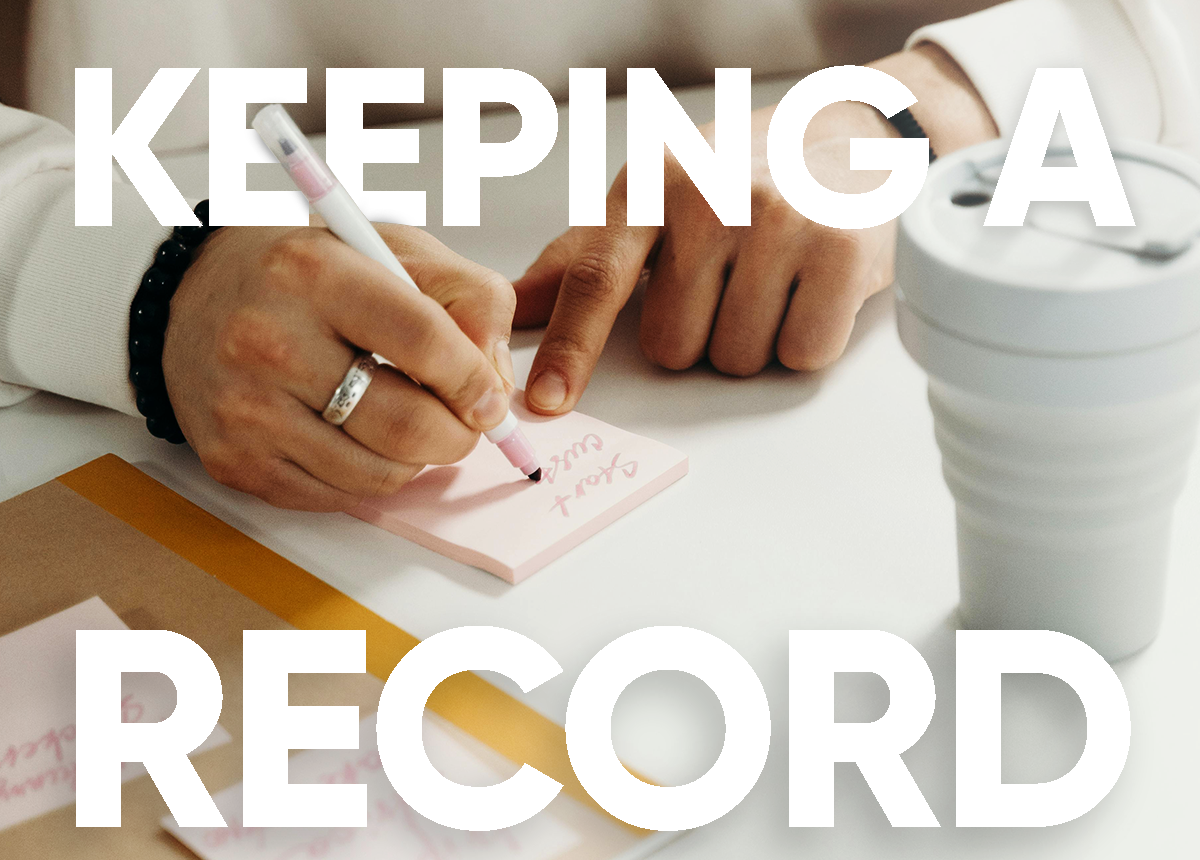
Keeping a Record
It will be no surprise to people that I like keeping a record of things. I write all my session plans in books, I record all illness and injuries across the performance pathway squads, and I keep all testing data so I can run stats year on year. But this isn’t just a Coach thing, I think it’s a personality trait I’ve had since I was young. Partly, it helps me feel organised. Everything is planned, organised into folders on my desktop and referenced for rationale and progress.
When I swam, from a young age I used to record every training session in A4 Books. I have piles of them. Warm-Up, pre-set, main-set, cool-down, overall volume, weekly volume, cycle volume - everything. That way I could look back on the hard work and take comfort and confidence in seeing what I’d done. In Britain it was very common to have a ‘logbook’ and often on National Camps or at Team days it was a requirement to bring your logbook in so the National coaching staff could see what type of sets and volume different swimmers were doing in their home programs.
As I got older, the writing of the entire set stopped. I only wrote down key sets and times. It’s surprising how the brain can remember 20x100’s worth of times down to the hundredth of a second! These books became very valuable to me. The set’s I did whilst swimming with Edinburgh University would be replicated or progressed weekly or on a season-by-season basis. Kick sets would be the same with different reps or faster turnarounds. Pace sets would progress in overall volume of ‘on’ repeats or rounds. Having them all written down with the outcome of each allowed me a very clear picture of what I’d done last time. I could visually see the progress. Not every week, but across a season.
But why did I value this?
The brain isn’t always our friend. We remember things differently to how they happened sometimes. A slight shift in the big picture. A set of 8x50’s where you held a time of 38.5 for 7x50’s but swam a 37.9 on the last one, can be remembered as “last time I was going 37’s”. This can often lead to feeling deflated next time when you repeat the set holding 38.0, because we think we were slower than last week/month. The same applies when we consider a converted time an official PB. Personal Best times are literally the fastest you’ve ever swam either short course or long course, whilst converted times are a hypothetical time giving you a marker for where your PB would most likely be when going from short course to long course racing (or vice versa). Writing down your PB’s is a great way to avoid disappointment should your new PB fall short of the converted (hypothetical) entry time.
In psychology, it’s often spoken about how self-reflection can aid performance. Having written yourself feedback, reminders and positive affirmations from training sessions or previous competitions can provide a positive shift in mentality when self-doubt and nerves creep in around race day. Having a visual log of all the good things you’ve achieved and worked hard on allows a clear picture of the effort put in before the competition begins.
I still have my university logbooks; the rest were begrudgingly put in the bin. I have two swimming logbooks here with me in Dubai and one specifically for gym set’s I trained. I’ve shared them with coaches who were interested in what sets I used to do, and times I used to hold. I use them myself in times where I want to reminisce about a life I used to dedicate myself too. I reference my gym logbook as a tool for exercise reminders. They have become a powerful tool of tried and tested methods for success both whilst I was a swimmer and now as a coach.
So, I urge everyone to give it a go. Start recording your sessions. After a session write down either the whole session or specific set’s, write a positive comment and then reflect on them before race day. It will not only give you confidence from seeing your performance in previous sessions but it can also serve as a reminder on where you were before the previous competition or even this time last year in training.