

Blog
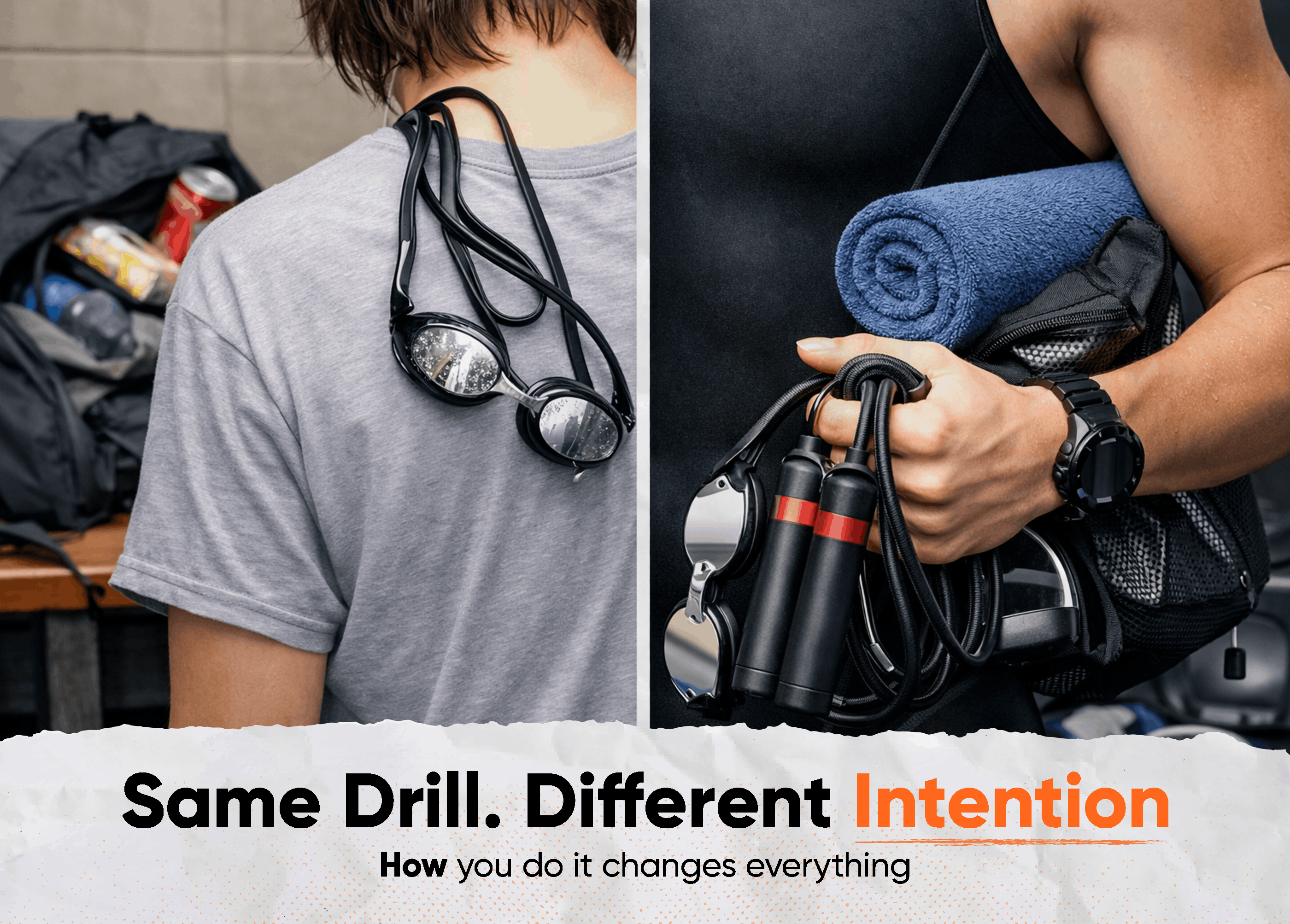
Intent
How you do something is more important than what you do.
Bold statement right? But I stand by it. At Hamilton Aquatics, I firmly believe we have excellent coaches who not only have high standards, a strong knowledge of the sport and passion, but also have diverse backgrounds of personal experience with swimming. The plan is discussed, agreed and set, but that is only half the story. As a coach, you guide athletes on how to train, you provide the sessions and the coaching cues. You provide the moral support and the confidence to push the limits. But unfortunately, we cannot do the physical work both in and out of the pool. That comes down to the athlete and their actions.
Often, it’s the little things that are forgotten about. The easy stuff that seems like it doesn’t matter as much. Skills, drills, pre-pool, mobility, nutrition and recovery are often given less focus and attention. Hard work makes you better right? But how do you keep a consistent level of hard-work and progress it? It’s in the details and it’s in the intention of how you do it.
Intention is important as ultimately it means you understand the reasoning for it. When you know why it is important for something to be done and done well, it becomes less of a tick-box and more of a focussed activity. From start to finish in training, you should be mentally engaged with what you are doing. If something is fast, it’s done with speed, but also with good technique and perfect skills. If something is slow, it’s done with focus and attention to detail. If you pick a certain drill, it should be for a specific reason, relevant to an aspect of stroke and performed to a high standard. If not, bad habits are formed and doing things well becomes progressively harder to achieve.
Now I know we talk about pre-pool and doing things right all the time, but it’s the first indication of how a session will go and how an athlete will progress in sport. Pre-pool is rarely difficult. Maybe skipping makes us sweat and our heart rate rises, but it’s not difficult. When I see athletes show up without a rope, starting late, not willing to try backwards skipping or attempt double unders, I see athletes with no intention of getting better, happy to stay in their comfort zone.
Being intentional also includes work outside the pool/ training environment. How we prepare and recover our bodies is important and allows for us to return to the next session in better condition than the day before. Many people say they need more sleep and less early morning sessions but when presented with the opportunity to sleep early, do not seize it. Instead, athletes often find other things to fill their time. How many times does your phone get in the way of being productive?
With nutrition, intent often comes from being prepared. Tiredness causes everyone to crave sugar and choose convenience over nourishment. Planning with meal prep, snacks and hydration allows for decision making to be kept to a minimum. Having a little tub of ‘emergency snacks’ in your bag after sessions can help prevent stopping at a fast food chain on the way home or scrolling through food delivery apps for after school meals. Understanding why you are making certain nutritional choices shows respect for your body and what you are putting it through during training every day.
Being intentional with your actions can also relate to your mentality. Making sure your self-talk is in a positive light. Re-framing situations from impossible, to difficult yet achievable will make the outcome better. Breaking down tasks into smaller steps, with the intention of making each better, will ultimately allow for a more controlled outcome where the process has been shaped and foundations are solid. Investing time, effort and often money in a sports psychologist or online psychology course can help highlight areas of weakness or give you useful insight into how better to cope in high pressure environments.
And lastly, school. Academics are so important and take up most of the time in your week. Most swimmers will be in school for 8 hours a day, study after and use their weekend for tutor sessions and revision, so intent plays a massive role. Whilst in school, it is in your best interest to try and work as hard as possible, be productive with your time around homework and try to reduce the number of additional hours spent learning subjects because you didn’t invest in it the first time. School is valuable and as most swimmers plan on going on to university, being intentional with your learning benefits the next stage of your life.
So, do you agree?
“How you do something, is more important than what you do”