

Blog
Red2Blue: Building Mental Resilience in Young Swimmers
Swimming teaches people many things. It teaches discipline, patience, commitment and how to work towards a goal over a long period of time. But perhaps one of the most valuable lessons swimming can teach is how to deal with pressure and take responsibility for your own response when things don't go well.
A swimmer can train hard for months and still have a race that doesn't go to plan. They can miss a qualifying time by a fraction of a second, make a mistake at a crucial moment, become frustrated with a coach, struggle with schoolwork or simply have a bad day.
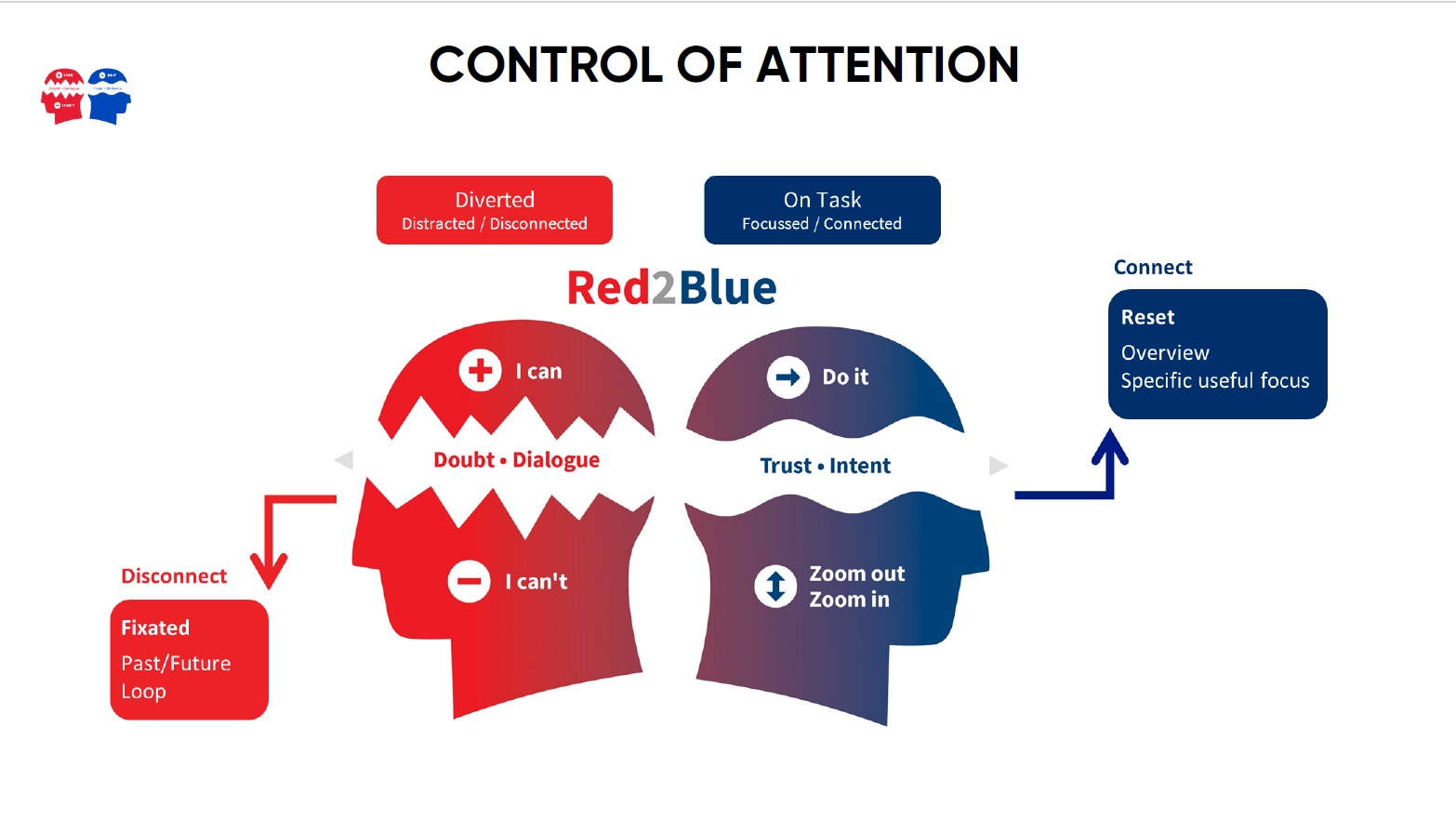
These moments are often unavoidable. What we can develop, however, is how we respond to them. This is where Red2Blue can be a useful tool. It provides swimmers with a practical framework to recognise what is happening, take ownership of their response and refocus on the things that will help them move forward. Red2Blue is based around a simple principle: the ability to zoom out, reset and zoom in when under pressure and in the moment. It isn't about pretending that difficult emotions don't exist or trying to be positive all the time. Instead, it gives us a common language and a set of tools to recognise what is happening, regain control of our attention and choose a productive response.
The aim isn't to make sure we are "Blue" 100% of the time. Nobody performs perfectly all the time, and life outside the pool will inevitably affect how we feel and perform in training each day. The aim is to become better at recognising when we have moved away from being focused and productive and learning how to get ourselves back on task.
What do "Red" and "Blue" mean?
Think about a training session that isn't going well. You might be thinking about how difficult the set is, how slow you are swimming, how fast everyone else is swimming or concerned about disappointing your coach. You might be starting to make mistakes in skills, stop hearing feedback and your heart rate may be getting higher. It's not necessarily that you are purposefully doing something wrong; rather, your attention has moved away from the things that will help you perform well. This is an example of being in "Red".
Red2Blue describes "Red" indicators as signs that we have become diverted from the task. These can show up through our demeanor, communication, decision-making and execution. We might become tense, reactive, unclear, disengaged, hesitant or overly focused on an outcome.
Being in Red isn't something to be embarrassed about. In fact, one of the most important parts of Red2Blue is learning to recognise and accept that these feelings happen. The next step is choosing what to do about them.
Being in "Blue" is about being connected to the present moment and the task. You might appear calmer, more engaged and your actions are more deliberate. You can prioritise information, make considered decisions and adapt when something doesn't go exactly as expected. Blue doesn't necessarily mean being relaxed. You can be highly excited, intensely focused and ready to train while still being Blue. The key is being in control of your attention rather than allowing pressure to control you.
The Red2Blue Mental Shift
One of the most useful ideas for young swimmers is that moving from Red to Blue doesn't have to take a long time. The Red2Blue approach encourages us to:
Recognise → Accept → Choose
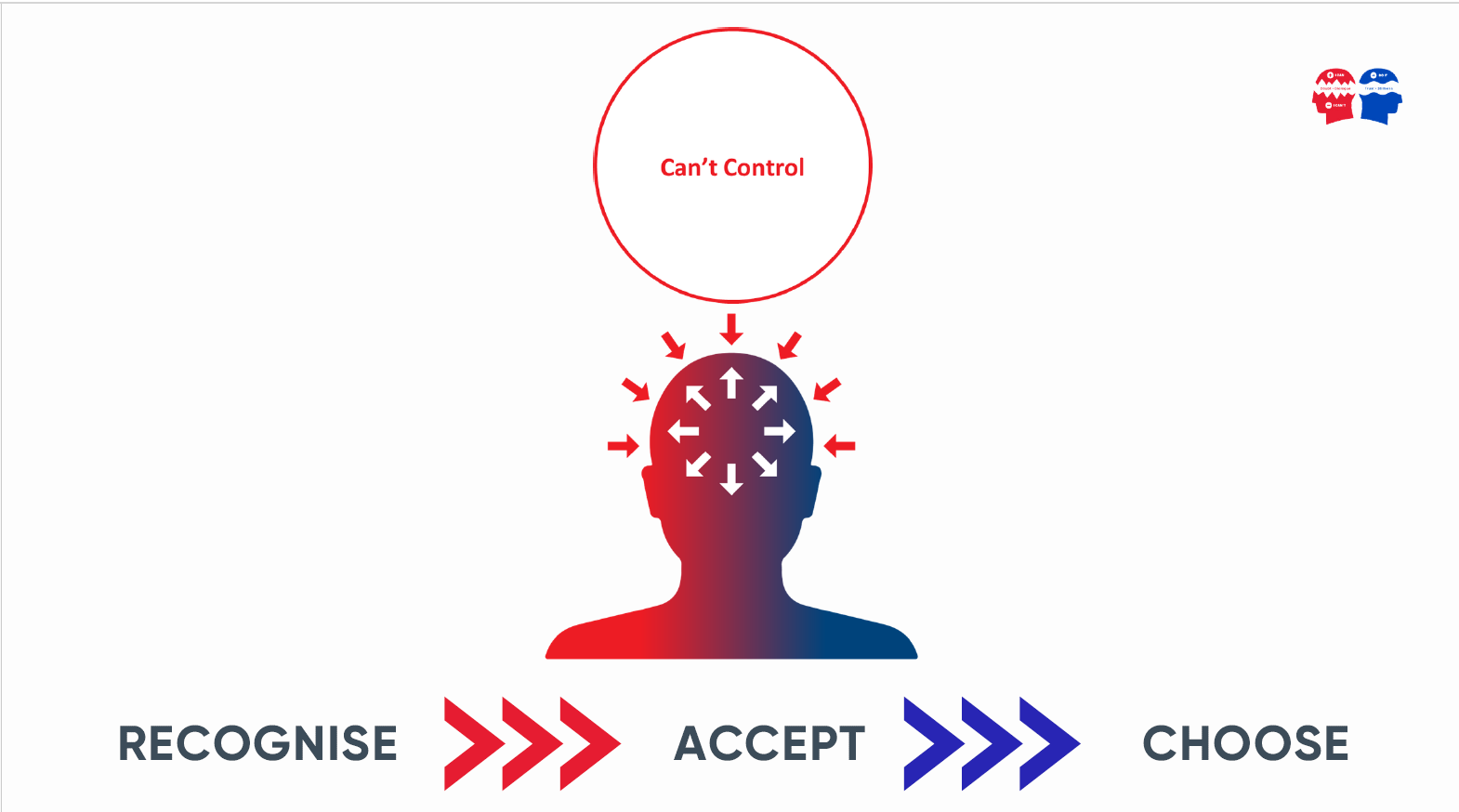
Recognise:
"I'm getting anxious."
Accept:
"That's okay. I'm under pressure because this matters to me."
Choose:
"What do I need to do next?"
That final question is powerful. Instead of spending energy asking "Why am I anxious?" or "What if I fail?", start looking for a useful action. Maybe that action is taking a breath. Maybe it is looking up and around. Maybe it is reminding yourself of the goals of the session. This is regaining control of attention and moving towards a positive response and productive outcome.
The Control Circles
One of the most practical Red2Blue tools is the Control Circles. The concept is simple. In any situation, there are three categories:
-
Can't Control: Things that are outside your direct control.
-
Can Influence: Things you may be able to affect but cannot completely control.
-
Can Control: Things you can directly manage yourself.
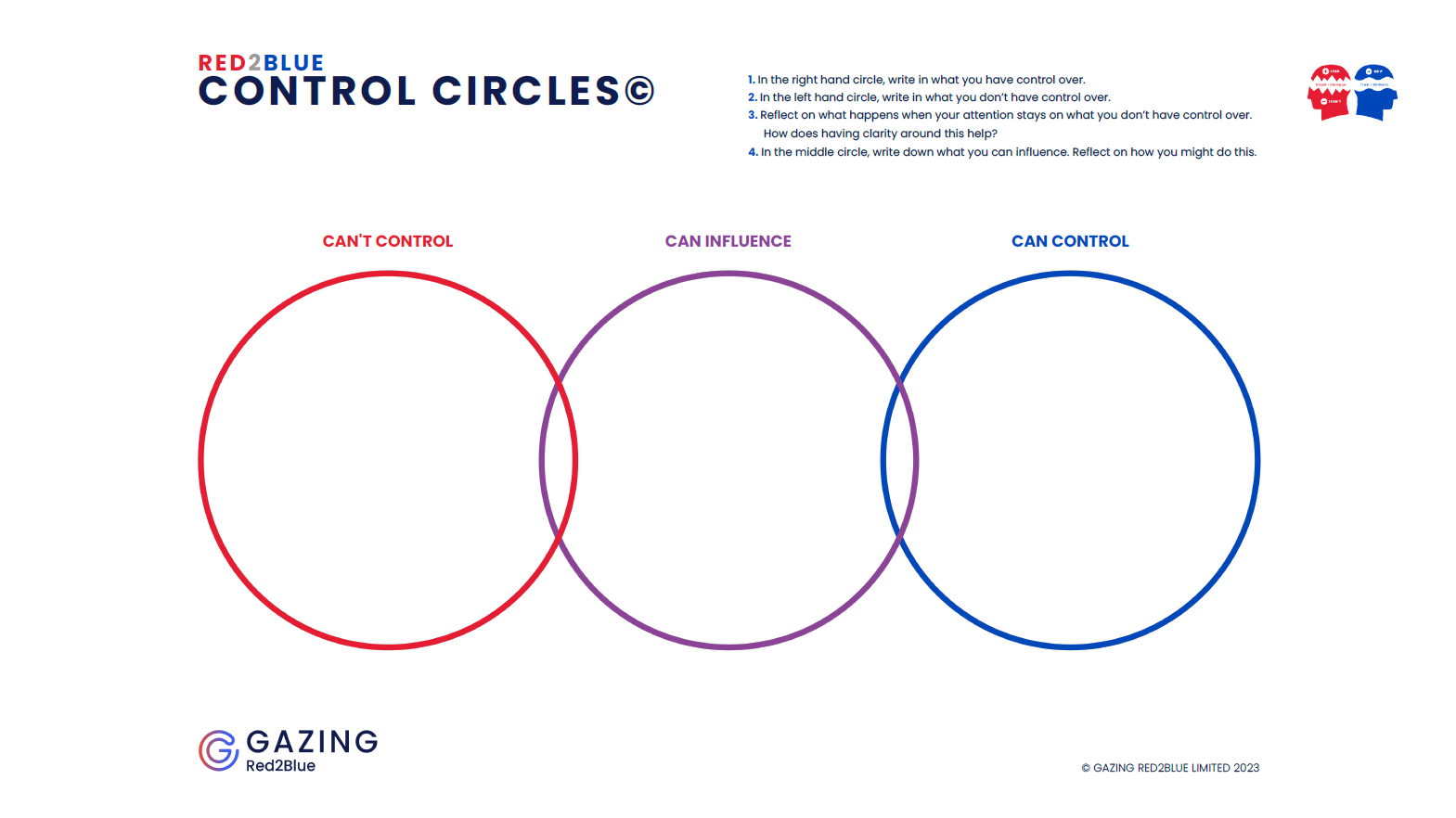
The circles provide a clear visual list of everything you are worried or concerned about. By emptying your thoughts into three distinct categories, it allows you to focus on the things you can control or perhaps influence. For example, we can always control our actions, responses and effort. We cannot control the overall outcome or other people's behaviour.
The Control Circles exercise asks you to consider what happens when your attention stays on things you cannot control, and how clarity about these categories can help. Spending energy worried about how fast people are training, why teammates aren't attending sessions or even what conversations people are having with the coach only provides more stress and anxiety that isn't beneficial to your own progress.
What If?
Another useful Red2Blue tool is the "What Ifs". For athletes, "What if?" can easily become a source of anxiety.
"What if I don't qualify?"
"What if I don't PB?"
"What if I don't win?"
The goal isn't to eliminate these thoughts. Instead, we can turn them into preparation. The Red2Blue 'What If' tool asks us to identify things that are likely to happen and may cause us to go into Red. We then rate their risk and impact and develop strategies to stay Blue or return to Blue when they happen.
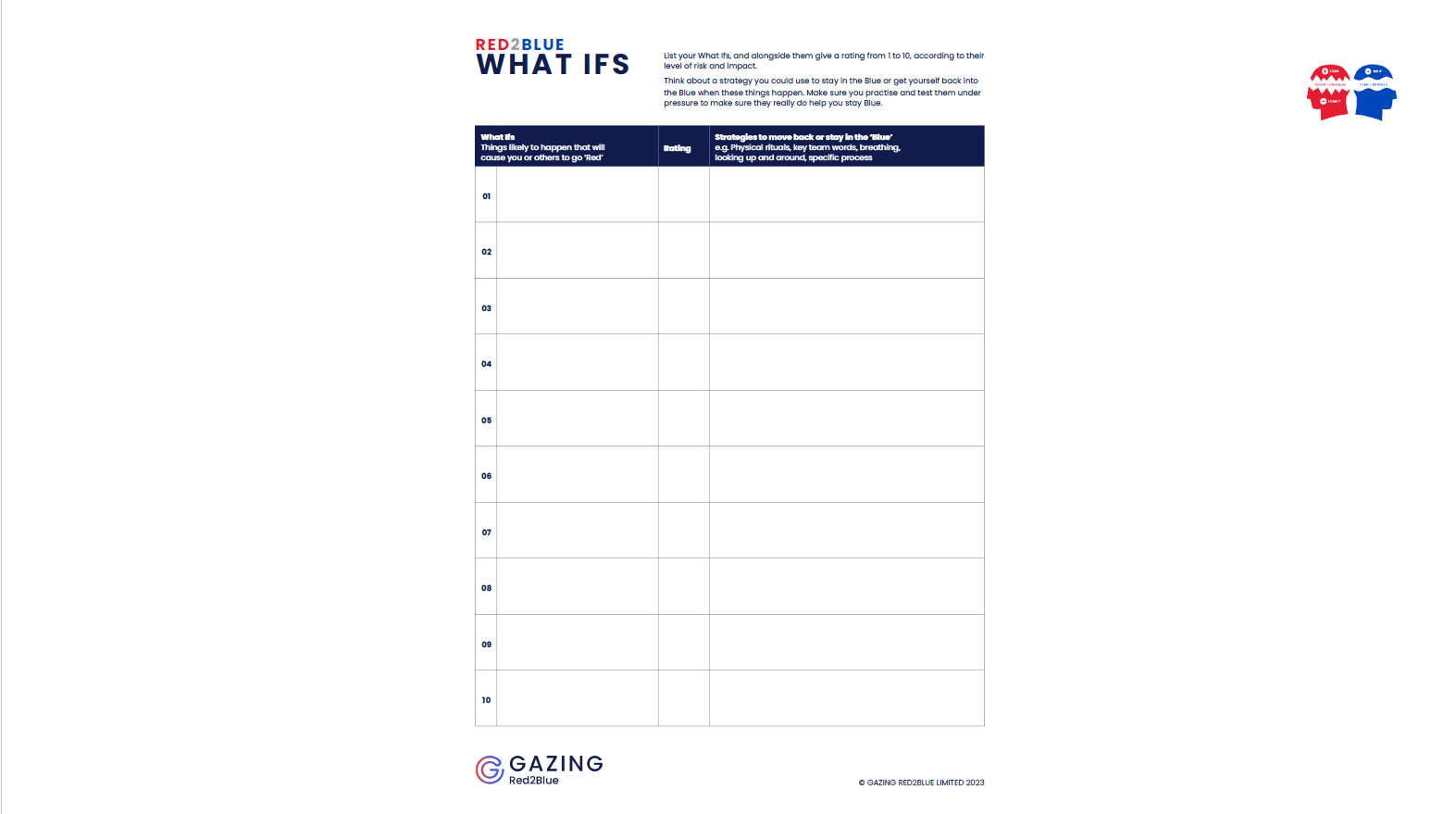
For example:
What if I get nervous before my race?
Instead of:
"I hope I don't get nervous."
Try:
"If I get nervous, I'll recognise it, take three slow breaths, look up and around, and bring my attention back to my race plan."
The important thing is to practice the strategy before the pressure arrives. Each swimmer will have a different way of bringing themselves back to Blue or remaining Blue, so it is important to practice these strategies. Just like you practice skills, technique and tactics in training, it is important to practice mental skills too.
What Can Parents Do?
Parents play an enormous role in helping young swimmers develop these skills. One of the biggest challenges for parents is wanting to immediately fix a problem.
When your child is upset or anxious, your instinct is to try and alleviate any negative thoughts. The car conversations home or the phone calls between races can often be a downward spiral into a Red headspace. This is a great opportunity to help your child manage their emotions and train the mental skills needed to build resilience.
Try asking questions around "What do you think you can do better next time?". This question gives the swimmer an opportunity to think rather than simply receive an answer. This doesn't mean parents shouldn't comfort their children. They absolutely should. Red2Blue isn't about telling your child to "just get over it." The first step is recognising and accepting the emotion.
"I can see you're disappointed. That clearly meant a lot to you."
Then comes the opportunity to move forward:
"What do you want to do next?"
This will help your child gradually develop independence in managing pressure.
Building the Skill Through Everyday Practice
Mental strength doesn't suddenly appear when you reach a big competition. Red2Blue is a useful tool to develop mental strength and resilience, but it is a trained skill that requires practice. That means Red2Blue can be practiced during ordinary moments.
For example:
You have a poor training session.
Recognise: "I'm distracted today."
Accept: "That's where I am right now."
Choose: "How can I be better organised for next time?"
These small moments are opportunities to practise. Over time, you become better at noticing when your attention has been diverted and can redirect it towards something productive quicker.
The Goal Isn't to Never Be in Red
Perhaps the most important message for swimmers and parents is this:
Red isn't failure.
Everyone experiences pressure, frustration, disappointment, nerves and uncertainty. The goal isn't to stay Blue every second of every day. The goal is to become better at noticing where you are, understanding what is happening and choosing what to do next. Sometimes life will push us towards Red. We can't always control what happens. But we can develop our ability to zoom out, reset and zoom in.
For a young athlete, the skill developed through this process goes far beyond the pool. It can help you to become more independent, more adaptable and more capable of dealing with pressure at school, at home, in sport and eventually in adult life.
The best swimmers aren't the ones who never experience pressure, disappointment or setbacks. They are the ones who develop the skills to recognise them, respond positively and continue moving forward. Those are skills that will benefit them long after their swimming career has ended.