

Blog
Lessons From A Collegiate Swimmer
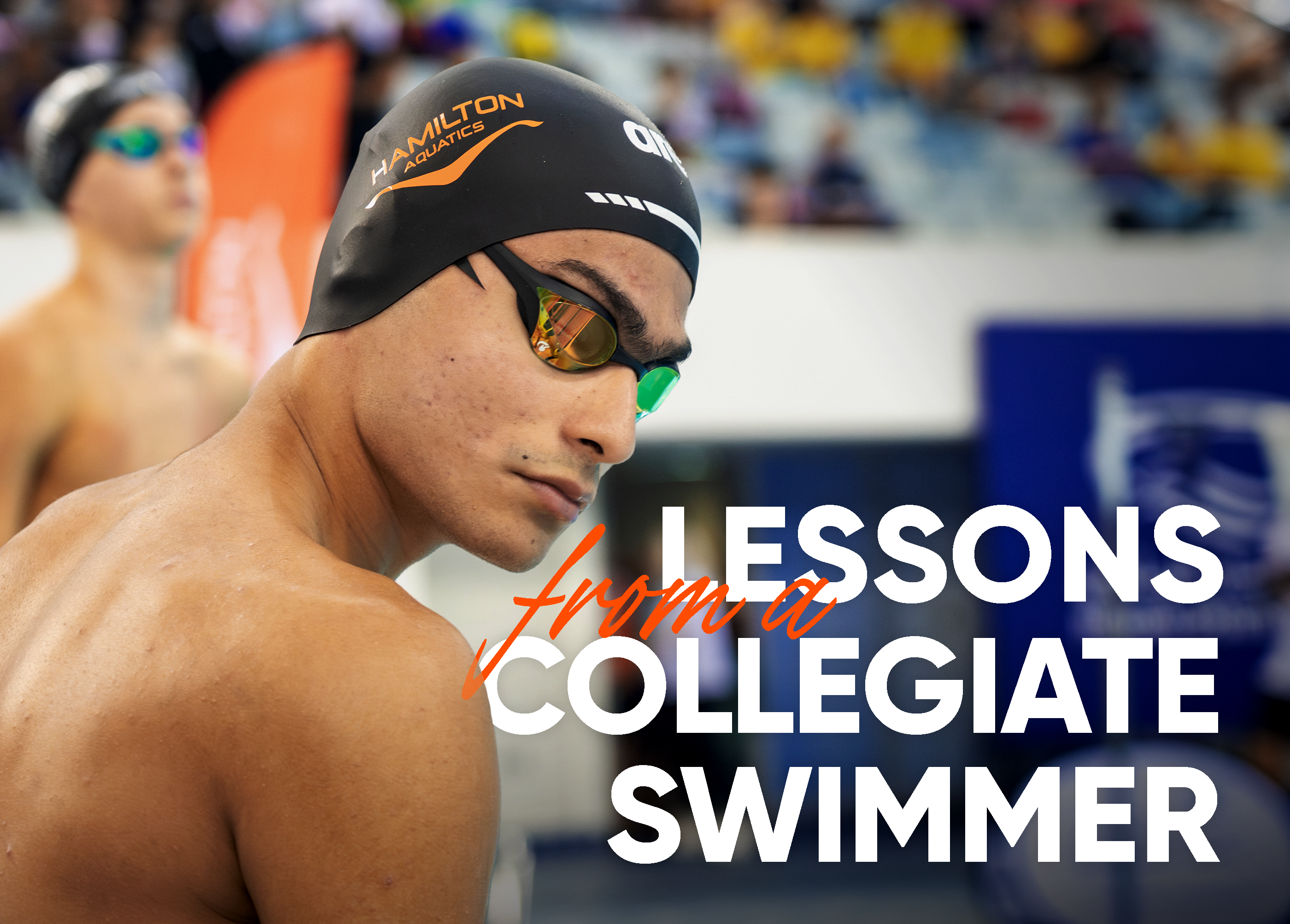
Hi, my name is Amaan Siddiqui and swam with Hamilton Aquatics for 11 years, leaving last season for College in the States. I started swimming in the Foundation squad at the age of seven with Coach Alex Gray and then worked my way up through the Performance Pathway, swimming with Stu for the last 8 years.
Having completed my freshman year at Colby College and being part of the varsity swim team, I wish someone would’ve taken the time to sit me down prior to arrival and provide me with an accurate description of what would be expected of me: swimming, studies and everyday life. I’ll give you an honest outline on each of these topics, and hopefully you can find it useful.
Swimming and training:
Hamilton has been the catalyst in making my transition into collegiate swimming a relatively seamless experience. To be honest, swimming at Colby was not only shorter, but also less challenging than the training I went through to prepare me for collegiate swimming at Hamilton. However, this is intentional, as a senior college athlete, the accumulation of meters and challenging sets during my time as a youth swimmer has created what I refer to as my engine, which allows me to train more strategically as a college athlete. Additionally, as a youth swimmer, the number of hours spent training will set the groundwork for your future success as a collegiate swimmer. You can't skip this process!
Training in college is more specific. Now that I am older, I have specified in my stroke and distance meaning that training can be focused on improving race strategies, minor technique adjustments and building strength and power in the gym.
Since my pool sessions have been a bit less intense compared to what I did before, it has allowed me to transfer some extra emphasis into the gym workouts. Having developed my technique in the gym at Hamilton, it gave me a strong base in which to progress strength in College sessions. With the switch in training (swimming volume and intensity), it has helped me to gain some more muscle mass which has had a positive impact on my swimming performance and also my injury prevention.
Communicate with the coach:
If you are having any trouble connecting with a new training style or have doubts over progress, communicate this with your coach. At Hamilton I had a strong relationship with the coaches as I had grown up around them for 11years. This made it easy to have conversations and for my coach to understand the next steps in training. Moving to a new program can take some time to adjust. Not just to the new training, but to the new team and a different coaching style. Being open and honest with the coach will help them to help you in a more effective way.
Academics and Time Management:
Being a full-time student requires the same amount of time as being a full-time student athlete. While this may be an accurate statement, it does not account for how busy each day in the life of a student athlete can be.
Almost every day of the week has morning training, followed by classes, gym and then afternoon training. On top of this, weekends are spent travelling and competing at Dual Meets. Around being an athlete, you must also stay on top of academic assignments and revision. Most student athletes don’t have much free time, and because of that they are expected to handle their schedules with care.
My advice would be to begin an assignment as soon as you receive it for greater success. Once you open the assignment document, understand what is required to complete the task, it will help remove any potential barriers that will cause a last-minute panic.
For a student athlete participating at a varsity level, this will be especially important as during certain weeks of the school year, meets and travel will create time constraints on your availability. Completing part of your assignment right away, you’re putting yourself one step ahead.
My top tip would be to take advantage of your professor’s office hours; most of your peers are missing out. Professors have designated office hours, where there are typically the least number of students to meet one on one with them. Be sure to visit them during these hours if you have an issue with your classes, assignments or understanding. Most professors will make exceptions when they know you are balancing academics with your sport and not due to a lack of effort.
Nutrition and Diet
You’re now on your own, and it will feel different than what you expected.
When you’re home, either with your parents or a nanny, there is always someone paying attention to how you’re fueling yourself. At college, this isn’t the case. No one is there to remind you to eat before training, recover properly after a workout, or accidentally under-fuel without realizing it. It is your responsibility now.
Fueling for varsity training is not the same as your classmates who are doing recreational sport or exercise. As a varsity college swimmer, you will have a large amount of training expectation. Your body will require significantly more macronutrients (carbs, proteins and fats) and total calorie intake than that of an average college student. Under-fueling is one of the biggest pitfalls of a young athlete looking to progress and perform.
Preparing food in advance will help you massively.
Following a stressful double and then having to go home and finishing your assignments, most people will reach for an easy option for meals. The trick is to prepare easy yet nutritious meals in advance so when you feel physically and mentally drained, you have prepared for moments where temptation to eat ‘junk’ food may take over.
On Sunday’s you should reserve time for meal prepping along with some portioned snacks. They don’t have to be fancy but at least they will be there when you need them.
Hydration:
Back home, the heat makes hydration automatic. In another country not as hot as Dubai, you can stop feeling as thirsty, but your body’s needs around training don’t change. Always keep a water bottle on you, it sounds obvious, but most people still don’t do it consistently. Making hydration a habit early in your swimming career will help transition into everyday life.
Lifestyle & Mental Health
Adapting to sharing your space with others will require you to work with those individuals instead of working against them. While most students have roommates in University housing, your schedule as a varsity athlete may be much different than your roommate’s. Whilst many students have a busy social life, a student-athlete has early morning training and morning classes. Trying to fit into the typical student life can cause an increased level of exhaustion and burn out risk. It would be beneficial to have an initial conversation with your roommate in order to communicate how the above will affect your needs. A simple discussion at the beginning of the year will help avoid unnecessary friction throughout the semester.
You should treat sleep like it’s part of your training program. Sleeping is the body’s best way to recover from training and racing, while also helping with memory consolidation, mood regulation and appetite control. As a varsity athlete that will be carrying a full-time course load, sleep is not just a luxury, but rather a requirement for you to perform at an optimum level. Consistently getting eight to ten hours of sleep per night over a semester will have a greater impact on your athletic performance, your academic performance, and your emotional stability than nearly anything else.
Student athletes often find it challenging to build a social network at college due to differing schedules than most of their peers. Due to morning training, athletes generally need to get to bed at an earlier time than their friends. The travel involved in being a collegiate athlete can often lead to a clash in schedule with social events and can create a feeling of isolation for the athlete. Early on in your college career, you should try to develop strong relationships with your swimming teammates. You may be experiencing the same feelings of isolation with general college students and there is a great sense of comfort and connection with sporting peers.
It’s very normal to feel lonely in the first month of college, but most people don’t speak about it.
The images and stories you see on social media can give a false impression of life in college, especially when you are trying to adjust to campus life. Nearly everybody in their first few weeks of college is trying to figure out how to cope with the adjustment to college life, and everybody is wondering if they are the only ones who are feeling that way. You need to give yourself time to adjust to the new environment before you can determine if you fit in with other people.
Swimming at a collegiate level is a wonderful commitment to make and will take a lot of hard work. Those that do the best at sport will be the ones that put everything together as a whole. Training, recovery, nutrition, sleep, competitions and academics, need to fit together. It isn’t complicated, but it does take consistent effort.
Get started right away. Be truthful about where you’re at, and don't underestimate how much one year will help you develop as a person if you just show up for yourself everyday.